You know those friendly cartoon cows on Ben & Jerry’s ice cream tubs? The ones grazing in green pastures under blue skies? Meet Woody — Ben & Jerry’s mascot, often called “the most interesting cow in the world.”
In 2020, Woody became the unlikely centerpiece of a class action lawsuit. A consumer accused Ben & Jerry’s of misleading shoppers with the words “milk and cream from happy cows” printed next to her on the packaging. The case ended up in a Vermont federal court, and the result is worth understanding — not just for ice cream lovers, but for anyone curious about how courts decide what counts as misleading advertising.
What was the fuss about?
Until recently, Ben & Jerry’s tubs carried this message:
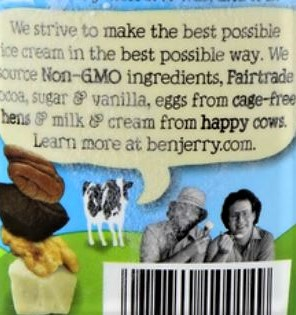
Curious consumers who visited the website found information about the company’s “Caring Dairy” program — basically, a set of standards that rewards farmers who treat their cows and the environment well.
A man named Ehlers filed a lawsuit claiming this was all very misleading. His argument went like this:
- The “happy cows” line made him think Ben & Jerry’s only sourced milk from feel-good, environmentally friendly farms.
- The website made the Caring Dairy program sound like a requirement for all suppliers.
- In reality, plenty of Ben & Jerry’s milk came from regular mass-production dairy farms.
He wanted a court order forcing Ben & Jerry’s to remove the “happy cows” wording and change its website. He also wanted compensation for himself and a whole class of consumers who, he argued, had been duped.
Ben & Jerry’s pushed back
The company asked the court to throw the case out before it even reached trial. Their three main arguments were pretty clever:
1. “Happy” is just an opinion. As the company put it, you can’t take a cow’s deposition and ask how it feels. Calling a cow “happy” is the kind of vague, feel-good marketing language that everyone understands isn’t a hard scientific claim. Lawyers have a name for this: “puffery.” It’s basically advertising fluff that no reasonable person would treat as a measurable promise.
2. The website was being read out of context. Ben & Jerry’s pointed out that the website actually said clearly that farms join the Caring Dairy program “voluntarily” and that “participating farms” must meet certain standards. If you read the whole page instead of cherry-picking one heading, the picture was much clearer.
3. The plaintiff couldn’t be fooled again. This is the legal kicker. To get a court order forcing a company to change its behaviour, you have to show you might actually be harmed in the future. Ehlers had already admitted he now knew not all the milk came from Caring Dairy farms. So how could he be tricked again? On top of that, Ben & Jerry’s had already removed the “happy cows” line from its packaging anyway.
What did the judge decide?
The judge sided with Ben & Jerry’s on every point.
On the “reasonable consumer” question, the court applied a sensible test: would an ordinary shopper actually be misled? The judge said no — not when you read the website as a whole. Pulling one phrase out of context and calling it deceptive isn’t enough. A reasonable consumer wouldn’t ignore the rest of the page that clearly explained how the program worked.
On the injunction question, the court agreed: since Ben & Jerry’s had already changed the packaging and the website language, there was no real risk of Ehlers being misled again. Case dismissed.
Why this matters beyond ice cream
This case is part of a bigger trend. For years, plaintiffs filing false-advertising lawsuits had a kind of unwritten rule on their side: whether a consumer was misled is a “question of fact,” and questions of fact have to go to trial. That meant companies often had to settle even weak cases just to avoid the cost of fighting them out.
Recent court decisions are pushing back. Judges are more willing to look at advertising claims and say, “Come on, this is implausible — no reasonable person would actually be confused by this.” The Second Circuit had already done this with Diet Coke (no, the brand name doesn’t promise weight loss) and with Dunkin’ Donuts steak (no, calling something “steak” doesn’t promise it’s additive-free). The Ben & Jerry’s ruling fits the same pattern.
There’s a particular lesson here for cases built around words like “sustainable,” “ethical,” or “socially conscious.” These terms are squishy by nature — they mean different things to different people. Courts seem increasingly willing to say that vague, feel-good language doesn’t create the kind of concrete promise that can support a fraud lawsuit. If you want to sue over a marketing claim, you probably need something more specific than a cartoon cow looking cheerful.
The takeaway
For shoppers: don’t read too much into mascots and marketing slogans. They’re meant to make you feel good, not to give you a precise breakdown of supply chains. If you genuinely care about how a product is made, look at the substantive details — certifications, audited standards, ingredient lists — not the cute imagery on the front of the box.
For businesses: vague aspirational language is generally safer than specific factual claims you can’t back up. But “safer” isn’t “bulletproof.” The further you stray from puffery into concrete promises, the more exposed you become.
And for Woody? She’s still on the carton. She just doesn’t talk about happy cows anymore. These days, the court noted, she has “no discernible expression at all” — which, ironically, is probably the safest legal position for a cartoon cow to be in.