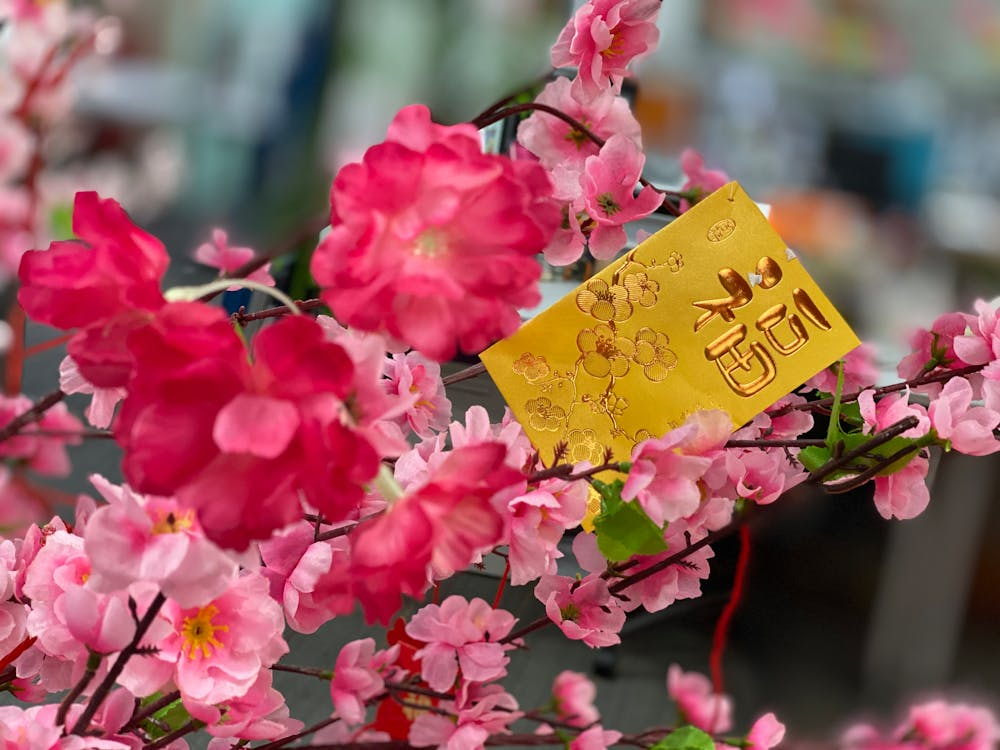
Every year around January or February, the same quiet panic ripples through Malaysian Chinese households. Newly married couples wonder if they’re giving “enough.” Working adults stare at their bank balance after buying mandarin oranges, new clothes, and reunion dinner ingredients, and ask whether RM10 in an ang pao is too stingy or just right. People living far from their kampung worry about whether sending an e-ang pao to po po feels respectful. And nearly everyone, at some point, has stood in front of an open drawer of unused red packets wondering which design to use for the boss’s child.
This guide is meant to settle most of those questions in one place. It draws on Malaysian customs as actually practised in Selangor, KL, Penang, Johor, Ipoh and Sabah — not the Singapore-flavored advice that dominates a lot of online searches — and it covers the modern situations that traditional grandparents never had to think about: e-wallets, divorced households, dual-income couples, foreign in-laws, and what to do when your colleague’s child has been waiting for you with both hands cupped in advance.
Chinese New Year 2026 falls on 17 February (Tuesday), marking the beginning of the Year of the Fire Horse — a once-in-60-years pairing — and the festive period runs through Chap Goh Mei on 3 March 2026. That means you have a full fifteen days to give ang pao, but also fifteen days during which any small misstep gets remembered for years. Let’s get this right.
Part 1: What Ang Pao Actually Means (And Why It Still Matters)
The term in Malaysia is ang pao (Hokkien: 紅包, âng-pau, “red packet”). Cantonese speakers may say lai see (利是), and you’ll occasionally hear the Mandarin hong bao (红包), but in Malaysian English and Manglish, “ang pao” is universal across dialect groups.
The tradition traces back over two thousand years to the Qin Dynasty, where elders threaded coins onto a red string and gave them to children as ya sui qian (壓歲錢) — “money to suppress the year-spirit.” The original purpose was protective rather than financial. It was meant to ward off Sui (祟), an evil spirit said to harm sleeping children on New Year’s Eve. The red string evolved into red paper, the coins evolved into banknotes, and somewhere along the way Malaysians turned it into one of the most quietly stressful exercises of the lunar calendar.
Two ideas survive intact from the original meaning, and both should shape how you give:
The blessing flows downward and outward. Ang pao moves from elder to younger, from married to unmarried, from senior to junior, from employer to employee, from host to guest. It is never an exchange between equals. This is why two single working adults of similar age don’t give to each other, and why your unmarried 35-year-old cousin still receives ang pao from your aunty.
The envelope, not the amount, carries the blessing. In strict tradition, the act of giving a sealed red packet transfers good fortune. The cash inside is the medium, not the point. This is why the elder who hands you a folded RM5 note in a re-used envelope is giving you exactly the same blessing as the rich uncle who hands you RM200 in crisp new notes — and culturally, you should receive both with the exact same warmth.
That said, we live in 2026. Inflation is real, expectations are real, and pretending otherwise helps no one. Below is the practical layer.
Part 2: Who Gives, Who Receives, and Who Is Exempt
The clearest rule, applied across all Malaysian Chinese dialect groups, is this: once you are married, you give. Until then, you receive.
A few clarifications that catch people out:
- Marriage is the trigger, not age or income. A 24-year-old newlywed gives ang pao to her 30-year-old single brother. He keeps receiving until he marries. This is non-negotiable in most families, though some progressive households have started loosening it.
- Working adults still receive from their own parents and elders, regardless of age, marital status, or how much they earn. Your father will hand you an ang pao when you are forty and earning more than him. Take it with both hands and say gong xi fa cai.
- Married couples give as a unit. One ang pao per couple per recipient is standard. You don’t give two separate envelopes from husband and wife to the same child.
- Divorced or separated givers continue to give, but typically reduce their amounts and give independently. Many divorced parents coordinate quietly so that their shared children don’t receive double from the same “household.”
- Widowed elders are normally exempt from giving in many families, especially Cantonese and Hakka households, though many continue out of pride or warmth. Never push an elder to give. If a widowed grandparent insists on giving you ang pao, accept it.
- The unmarried-at-40 question. There is no actual rule that a never-married 40-year-old must start giving. However, many begin voluntarily — to nieces, nephews, godchildren, and elderly parents — both as a gesture of seniority and to avoid being perpetually “received from.” Do what feels right. No one will judge you for receiving; some may quietly judge you for not giving when you clearly can.
The Reverse Direction: Adult Children to Parents
This is the most important ang pao you will give all year, and the one most working Malaysians think about least. Married adult children give ang pao to their own parents and parents-in-law. This is the symbolic reversal of the blessing flow — an act of filial gratitude — and the amount is expected to be larger than what you give to children.
For most working Malaysian Chinese, parental ang pao now sits in the RM200 to RM1,000+ range per parent, depending on income, number of siblings contributing, and family expectations. Couples who earn well and are the only or eldest child often give RM500 to RM2,000 per parent. There is no upper limit, and many families view this as the parents’ actual “annual bonus” from their children, especially if the parents are retired.
Part 3: How Much to Give — A Realistic 2026 Malaysian Guide
Forget the inflated Singapore figures floating around online. Here are realistic Malaysian benchmarks based on current market practice in 2026, adjusted for KL/Selangor cost of living. Adjust downward by 10–20% if you’re in smaller towns or East Malaysia, where giving norms are gentler.
Family — Direct Recipients
| Recipient | Comfortable Range (RM) | Notes |
|---|---|---|
| Your own parents | 300 – 1,500+ each | Larger if you are eldest, only child, or earning well. Many give RM888 or RM1,288 for symbolic luck. |
| Parents-in-law | 300 – 1,500+ each | Match what you give your own parents. Imbalance gets noticed. |
| Grandparents | 100 – 500 each | Often given on top of what your parents give. |
| Your own children | 50 – 200 each | Plus a separate “main” packet from grandparents. |
| Younger siblings (unmarried, working) | 50 – 200 | Token amount. They’re family. |
| Nieces and nephews | 30 – 100 | Higher for closer relationships, godchildren. |
| Cousins’ children | 10 – 30 | Standard “extended family” rate. |
Friends, Colleagues, and Their Children
| Recipient | Comfortable Range (RM) | Notes |
|---|---|---|
| Close friends’ children | 20 – 50 | Especially those who visit your home. |
| Acquaintances’ children | 5 – 20 | “Token blessing” rate — what counts is the gesture. |
| Boss’s children (if relevant) | 50 – 100 | Only if your office culture supports it. Many Malaysian offices do not. |
| Your direct reports’ children (if you are the boss) | 20 – 50 | If you have an established office tradition. |
Service Staff and Helpers
| Recipient | Comfortable Range (RM) | Notes |
|---|---|---|
| Domestic helper | RM100 – 500 | One month’s salary is generous and traditional; RM100–200 is now common practice. |
| Regular driver / Grab driver you use weekly | 20 – 50 | Optional but appreciated. |
| Condo security, cleaners, gardeners | 10 – 20 each | Many condos coordinate group giving. |
| Hairdresser, regular kopitiam aunty, tailor | 10 – 30 | “Thank you for the year” gesture, optional. |
Single People in Your Life Who Aren’t Family
This is the trickier modern category. If you are married and visiting a friend who is single and around your age, you do not give them ang pao — that would be condescending. But if your single friend visits your home with their parents and the parents are giving ang pao to your kids, the gesture goes only one direction: from married to unmarried minors, not adult to adult.
Part 4: The Numbers Game — Lucky and Unlucky Amounts
Malaysian Chinese take number symbolism more seriously than many overseas Chinese communities. The amount inside the envelope matters almost as much as the act of giving.
Avoid at All Costs
- 4 (四, sì) — sounds like 死 (sǐ), “death.” Never give RM4, RM14, RM40, or RM44. RM44 is read as “double death” and is genuinely offensive in older Hokkien and Cantonese households.
- Single notes ending in odd numbers other than 9 — RM3, RM7, RM11, RM13 all carry awkward connotations. Odd numbers are traditionally associated with funerals and condolence money in Chinese culture. Always give in even amounts, with two specific exceptions noted below.
Strongly Preferred
- Even numbers — RM2, RM10, RM20, RM50, RM100, RM200. The principle is that good fortune comes in pairs (好事成雙).
- 8 (八, bā) — sounds like 發 (fā), “to prosper.” RM8, RM18, RM28, RM88, RM188, RM288, RM888 are all considered powerfully auspicious.
- 6 (六, liù) — sounds like 流 (liú), “smooth flowing” or 祿 (lù), “prosperity.” RM6, RM16, RM66, RM168 (“一路發” — prosperity all the way) are all popular.
- 9 (九, jiǔ) — sounds like 久 (jiǔ), “long-lasting.” RM9, RM99, RM999. This is the one odd number that is universally welcomed because of its homophone with longevity. RM99 to a newlywed couple wishes them an enduring marriage.
- 2 (二, èr) — represents pairing and harmony. Especially appropriate for couples and weddings. RM22, RM222.
The Composite Lucky Numbers
These are amounts that combine multiple meanings and are particularly favored in Malaysian Chinese practice:
- RM168 — yi lu fa (一路發), “prosperity all the way.”
- RM188 — yi sheng fa (一生發), “prosperous for life.”
- RM288 — easy easy prosper.
- RM388 — sheng sheng fa (生生發), “perpetually prosperous.”
- RM518 — wo yao fa (我要發), “I want to prosper.”
- RM888 — triple prosperity. Reserved for very important recipients (parents, in-laws, weddings).
The Coin Question
Never put coins in an ang pao. The Hokkien phrase bo lui (沒錢, “no money”) is associated with the rattling sound of coins, and giving coins is considered both stingy and inauspicious. If you have small denominations, use a single RM1 or RM2 note instead.
Part 5: Dialect Group Differences You Should Actually Know
Malaysia’s Chinese community is not monolithic. Hokkien, Cantonese, Hakka, Teochew, Hainanese, and Foochow households each carry slightly different ang pao customs, and ignoring them when visiting your spouse’s family of a different dialect can lead to small but memorable awkwardness.
Hokkien Households
Dominant in Penang, parts of Klang Valley, and Johor. Hokkien families place enormous emphasis on the ninth day of CNY, which is Pai Ti Kong (拜天公) — the Jade Emperor’s birthday — and is treated by many Hokkien as more important than New Year’s Day itself. Ang pao given on or after the ninth day in a Hokkien household carries amplified blessing. If you marry into a Hokkien family, expect the ninth-day prayers to be a major event, and have ang pao prepared for the occasion.
Hokkien families are also more likely to use the phrase âng-pau na bē tāng-tāng, kóng ōe tio̍h tāng-tāng — “if the ang pao isn’t heavy, at least let your words be” — a gentle reminder that warm greetings matter as much as the amount.
Cantonese Households
Dominant in KL, Selangor, Ipoh, and parts of Negeri Sembilan. Cantonese families call ang pao lai see and tend to give in larger numbers but smaller individual amounts — RM5 and RM10 lai see distributed widely to almost every younger person they encounter, including service staff, is a Cantonese-leaning habit. The fifth day of CNY is Choy San’s birthday (the God of Wealth), heavily observed in Cantonese households, and many will give a small “wealth” lai see to family members on that day.
Cantonese tradition also includes the practice of lai see for the unmarried adult who is “still searching” — a slightly affectionate, slightly teasing gesture. Don’t take offense if your married Cantonese auntie hands you lai see at 35 with an arched eyebrow. She’s wishing you luck.
Hakka Households
Concentrated in Sabah, parts of Selangor (Mantin, Nilai, Jelebu), and pockets across Malaysia. Hakka families historically emphasized practical, modest giving, reflecting their nomadic agricultural roots. Hakka traditions extend the celebration through to the twentieth day (Tien Chon Ngid, Sky Mending Day, honoring the goddess Nüwa), so don’t be surprised if Hakka relatives are still giving and receiving ang pao well past Chap Goh Mei.
Teochew, Hainanese, Foochow
Smaller dialect groups in Malaysia, generally following customs similar to either Hokkien (Teochew) or their own regional patterns. When in doubt in a household of unknown dialect, default to Hokkien-Cantonese hybrid practice, which covers about 80% of Malaysian Chinese norms.
Part 6: The Etiquette of Giving — How to Hand Over an Ang Pao
The mechanics matter. Many younger Malaysian Chinese learn the cash amounts and forget the gestures.
Use both hands. Always. Hold the ang pao with both hands when offering, and the recipient receives with both hands. One-handed giving is read as careless or disrespectful, particularly to elders.
Time it correctly. The proper moment to give is upon arrival at the host’s home, not when you are leaving. Greeting first, ang pao second. The reverse — giving on the way out — feels transactional, like you are paying for the visit.
Pair the ang pao with greetings. Gong xi fa cai (恭喜發財) is universal. To elders, add shen ti jian kang (身體健康, “good health”) or chang ming bai sui (長命百歲, “long life”). To business contacts, sheng yi xing long (生意興隆, “may your business prosper”). To students, xue ye jin bu (學業進步, “progress in your studies”). The ang pao is the punctuation; the greeting is the sentence.
Recipients should receive with both hands and not open immediately. Opening the envelope in front of the giver is universally considered rude across all Malaysian Chinese dialect groups. Slide it into a pocket or bag and look at it later in private. If you are coordinating ang pao for children, teach them this from age four or five — many parents fail to, and it shows.
Never let a child give ang pao to an elder or to service staff. This is considered insulting — it inverts the blessing flow. A married child can give to their younger cousin, but a child should not be the one handing the security guard’s packet over. The married adult does that.
New notes only. This is more than aesthetic. New, crisp notes symbolize a fresh start and untainted blessing. Banks across Malaysia — Maybank, CIMB, Public Bank, Hong Leong, RHB, AmBank — open new note exchange counters in early February. Queue early or use your bank’s online appointment system. In 2026, many banks are also offering “recycled fit” notes — slightly used but bank-pressed to look new — as an eco-conscious alternative, and these are now culturally acceptable.
Do not use envelopes from previous years that have been written on. Re-using a perfectly clean, unmarked envelope is fine. Re-using one with a faded “To: Jia Jia, From: Auntie Lim” inscription from 2023 is not.
Part 7: Physical vs E-Ang Pao — The 2026 Reality
E-ang pao via DuitNow, Touch ‘n Go eWallet, MAE, GXBank, and bank apps have moved from “novelty” to “completely normal” in Malaysia. Every major Malaysian bank now supports festive transfer designs through DuitNow, and the recipient does not need to install anything for it to land in their account. But not every situation is appropriate for digital giving.
Use Physical Ang Pao When
- Visiting elders in person. A folded note in red paper, handed over with both hands, carries a tactile weight that a notification cannot replicate. Grandparents in particular still strongly prefer physical envelopes, and many will tuck them under their pillows or in their wardrobes as keepsakes.
- First Chinese New Year visits to in-laws. Always physical. This is not the year to optimize for convenience.
- Children below age 12. The joy of holding the envelope and tearing it open later is half the magic.
- Reunion dinners and large family gatherings. The exchange is part of the ritual, not an item on a to-do list.
E-Ang Pao Is Appropriate When
- You cannot be physically present. This is the original use case and remains the strongest. Sending a digital ang pao to your parents in Penang while you are stuck in KL during a work emergency is far better than nothing.
- Distant relatives and extended family abroad. Cousins in Singapore, Australia, the UK, or anywhere else.
- Younger nieces and nephews who genuinely prefer it. Gen Z teens and university students often find e-pao easier (they can spend it directly), and the “money games” features in MAE and TNG eWallet — where recipients open a randomized lucky packet — actually re-introduce some of the playfulness.
- Group ang pao among friends. TNG’s group ang pao feature, where everyone “fights” for a random share, has become a popular way to celebrate among colleagues and friends without anyone needing to track exact reciprocal amounts.
- Service staff you do not see in person. Your security guard and the cleaning staff are obvious physical recipients; a remote freelancer or virtual assistant is not.
A Common Mistake
Sending an e-ang pao to a parent or grandparent while you are physically with them, sitting in the same room. This reads as lazy regardless of your intent. If you are present, hand them a physical envelope. The digital convenience is for distance.
Part 8: Modern Edge Cases — The Questions Nobody Wants to Ask Out Loud
These are the situations that most ang pao guides skip. They are also the situations that cause the most quiet stress.
“I’m newly married and I don’t know how much to give my in-laws”
Ask your spouse, then double it. The most common mistake newly married Malaysian Chinese make is under-giving to in-laws in the first year because they “don’t want to set a precedent.” The opposite happens — giving too little in year one is remembered, and giving more in year two looks like apology rather than generosity. Set the bar appropriately on your first married CNY and maintain it.
“I’m unemployed or between jobs this CNY”
Give what you can without breaking yourself. A married unemployed couple giving RM10 to each child and RM50 to parents is fully respected — the gesture is what matters. Never borrow money to give ang pao. Anyone who would judge you for a small ang pao when you’re between jobs is not someone whose judgment is worth carrying.
“My parents are divorced and I’m visiting both”
Give equal amounts to both, or give slightly more to whichever parent has the harder financial situation. Coordinate with siblings so the amounts are consistent across the family — uneven giving across divorced parents creates the impression of taking sides.
“I’m dating someone but not married. Do we give as a couple?”
No. Until legal or customary marriage, you each give individually as single people, which means you both still primarily receive. The exception is if you are visiting your partner’s family for the first time and want to bring ang pao for the children — this is a gesture of respect and is welcome, but should be modest (RM10–20 per child).
“My friend is non-Chinese and visiting for CNY. Do they give ang pao?”
Non-Chinese guests are not expected to give ang pao. Many Malay and Indian friends do anyway, as a gesture of warmth and reciprocation for duit raya and Deepavali ang pow exchanges. If they offer, accept graciously. Do not put them in an awkward position by visibly waiting.
“I’m Chinese but not married. My same-age married cousin gives me ang pao. It feels weird.”
This is normal Malaysian Chinese practice and should not feel infantilizing. The blessing is symbolic, not a comment on your life choices. Receive it warmly, reciprocate by giving ang pao to your cousin’s children if they have any.
“My boss expects ang pao from us collectively but we don’t want to”
In modern Malaysian workplaces this is increasingly rare and pushing back is reasonable. If it is firmly entrenched, a small token (RM10–20 per junior employee, pooled into one envelope to the boss’s children, not the boss directly) is standard. Ang pao should never flow upward from junior to senior in a corporate context — that crosses into bribery territory.
“My adult sibling is married but earns much less than me. Do they still give me ang pao?”
Yes, by tradition. But if the gap is large and obvious, you can quietly tell them once: “Don’t worry about giving us ang pao this year, we just want you to come over.” Say it once, mean it, and don’t bring it up again. Accepting a smaller ang pao gracefully is also fine.
“I’m Chinese-Malaysian but raised abroad and just back. I have no idea what to do.”
You’re not alone — many returning diaspora face this. Default rules: if married, give to parents (RM300–1,000 each), give to nieces/nephews (RM30–50), give to children of relatives (RM20–30). Use new notes. Hand over with both hands. Skip giving to anyone older than you who isn’t a service worker. You will not get it perfect, and Malaysian Chinese aunties forgive returning diaspora more than they forgive locals.
Part 9: A Practical Budget Guide
For most working Malaysians, the total CNY ang pao bill lands somewhere between RM800 and RM5,000+, depending on family size, marital status, income, and dialect group. Here is a way to budget it without doing it on a napkin on the eve of the festival.
Step 1: List every recipient. Write them down. Not from memory — actually list them. Parents (both sides), grandparents (both sides), siblings’ children, your own children, close friends’ children, godchildren, helpers, service staff. You will be surprised how many you forget.
Step 2: Assign amounts by tier. Use the tables in Part 3. Round to lucky numbers.
Step 3: Add 15% buffer. Every year, two or three children appear who weren’t on your list — a friend’s friend, a new in-law’s nephew, the neighbor’s grandchild. Carry RM10 and RM20 envelopes for these.
Step 4: Withdraw cash and prepare envelopes early. Don’t do this on Chinese New Year’s Eve. Banks are mobbed, ATMs run out, and you’ll end up giving uneven amounts because you’re stuffing whatever you have left.
Step 5: Label your envelopes lightly in pencil. A small note in the corner of each ang pao — “P” for parents, “N” for nieces, “F” for friends’ kids — helps you grab the right one in the moment without opening it. Erase or use removable stickers if you’re worried about etiquette.
For a married Malaysian couple in their 30s in KL with two parents on each side, two children of their own, three nieces/nephews, one helper, and a normal social calendar, the realistic 2026 budget runs roughly:
| Category | Amount |
|---|---|
| Parents (4 × RM500) | RM2,000 |
| Own children (2 × RM100) | RM200 |
| Nieces/nephews (3 × RM50) | RM150 |
| Grandparents (assume 2 × RM200) | RM400 |
| Friends’ children (~10 × RM20) | RM200 |
| Helper | RM200 |
| Buffer envelopes (10 × RM20) | RM200 |
| Total | ~RM3,350 |
Adjust up or down by one tier depending on income and family size. The point is that this is a known annual expense, not a surprise. Treat it like Raya for Muslim Malaysians or Christmas for Christians — a budget category, planned in November.
Part 10: Things to Stop Worrying About
After all of the above, a closing note: most Malaysian Chinese families are more forgiving than the rules make them sound. The aunties who count and judge exist, but they are a minority and they will judge you regardless of what you do, so don’t optimize for them.
What actually matters, in the order it matters:
- That you turned up. Showing up at the reunion, at the visit, at the prayer — physically present, hands together, gong xi fa cai on your lips — is worth more than the contents of any envelope.
- That you gave with warmth. A RM10 ang pao given with a real smile and a real greeting outweighs a RM100 ang pao tossed across a table.
- That you remembered your parents. The single biggest ang pao failure across Malaysian Chinese millennials and Gen Z is under-giving to their own parents while over-giving to friends’ children to avoid social embarrassment. Reverse this. Your parents notice. Your friends’ children won’t remember.
- That you didn’t break the basic rules. No 4s. No coins. New notes. Both hands. Married gives to unmarried. The rest is texture.
This is the Year of the Fire Horse — only the second one in our parents’ lifetimes — and the symbolism is movement, courage, and momentum. Spend less time worrying about whether RM38 is too odd a number and more time actually visiting the people who matter to you.
Gong xi fa cai. Wan shi ru yi. Sheng ti jian kang.
May your Year of the Horse gallop into prosperity, and may every ang pao you give and receive carry the blessing it was always meant to.